Excelsior District Homes: A Value-Oriented Buyer Guide
July 2, 2026
July 2, 2026
Wondering where you can still find a single-family home in San Francisco without jumping to some of the city’s highest price points? The Excelsior stands out for buyers who want more space, a practical layout, and a lower entry point than several nearby neighborhoods. If you are weighing budget, home style, and long-term value, this guide will help you understand what Excelsior offers and what to watch for before you make a move. Let’s dive in.
Excelsior is best understood as a value-oriented San Francisco neighborhood, not a bargain market. In May 2026, Redfin reported a median sale price of $1,349,546 in Excelsior, compared with $1,698,983 citywide. That puts the neighborhood about 20.6% below the San Francisco median sale price.
That gap matters if you want to buy in the city but need more breathing room in your budget. It can create an opening for first-time buyers, trade-up buyers, and long-term planners who want a single-family home at a lower price point than some of San Francisco’s most recognized residential areas.
Redfin also places Excelsior below Noe Valley at $2.3 million, Glen Park at $1.8 million, and Bernal Heights at $1.6 million. In simple terms, you are often paying less for entry into Excelsior while still buying in a high-cost, high-demand San Francisco market.
Lower than citywide does not mean slow or easy. Redfin describes the Excelsior market as most competitive, and homes averaged 13 days on market in May 2026. If you find a home that fits your needs, you should be prepared to move quickly.
That speed can surprise buyers who assume a more affordable neighborhood will come with less pressure. In Excelsior, the value story tends to attract buyers who are looking carefully at tradeoffs and ready to act when a strong option appears.
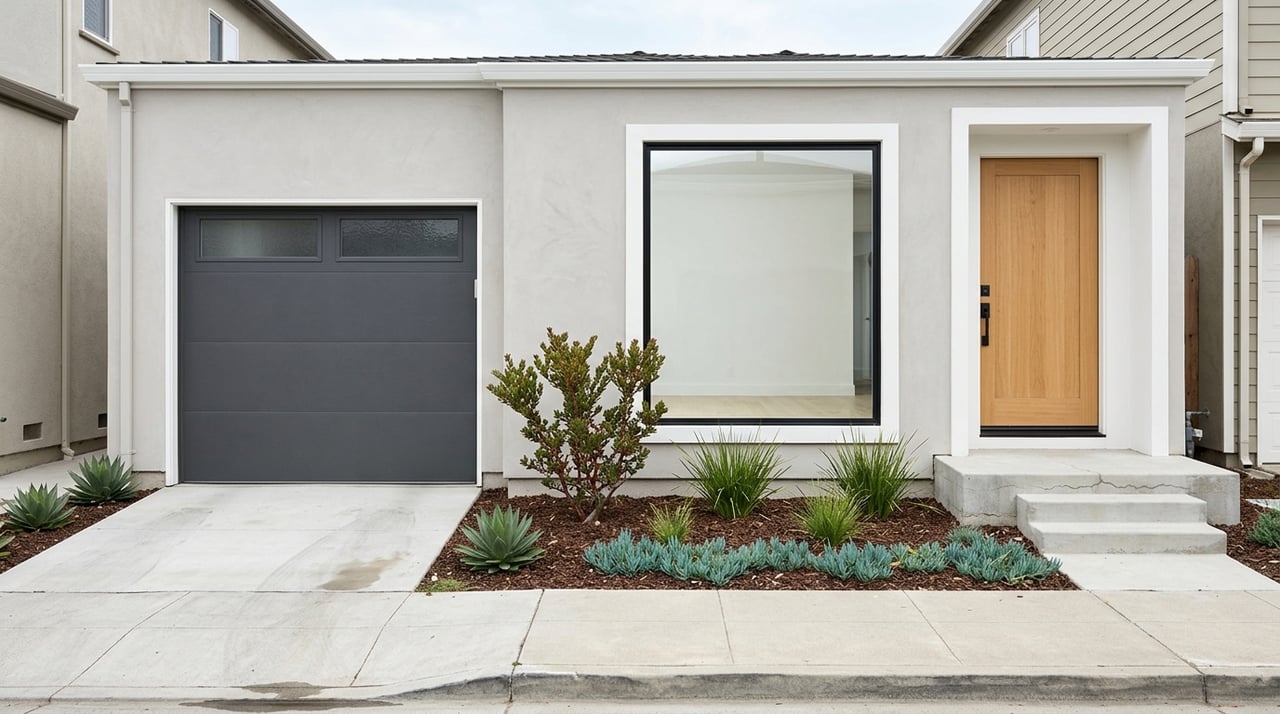
One of Excelsior’s biggest draws is its housing stock. According to San Francisco Planning, the Excelsior and Outer Mission area was built out heavily in the 1920s through 1940s, with tract housing shaped by zoning that encouraged single-family homes with garages.
That history still shows up in today’s inventory. San Francisco Planning reports that 82.3% of housing units in the Excelsior and Outer Mission study area are single-family homes, compared with 31.9% citywide.
For many buyers, that is the heart of the neighborhood’s value proposition. You are looking at a part of San Francisco where single-family housing is much more common than it is across the city overall.
The same planning analysis shows that many homes have practical bedroom counts for everyday living. About 42% of homes have 2 bedrooms, while 44% have 3 to 4 bedrooms.
That mix can work well if you want separate sleeping areas, a home office, or added flexibility over time. It also helps explain why Excelsior often appeals to buyers who want more room than they are finding in smaller flats or condos elsewhere in the city.
Excelsior homes often sit on compact urban lots. One San Francisco Planning case file describes a 25-by-85-foot parcel with a 1,293-square-foot single-family dwelling, which helps illustrate the neighborhood’s narrow-lot pattern.
That does not describe every home or every block, but it gives you a realistic frame of reference. Many properties may feel larger than a central-city flat, yet still more compact and less expandable than a suburban house.
For many buyers, Excelsior works because it offers a useful middle ground. You may get more house for the money than in some better-known San Francisco neighborhoods, while staying inside city limits and within a neighborhood with established residential housing.
The tradeoff is that much of the housing stock is older. That means your search is not only about location and list price. It is also about deciding whether a property mainly needs cosmetic updates or whether it may require deeper work tied to systems, layout, or permits.
This is not a hard rule for every home. It is a due diligence mindset that makes sense in a neighborhood shaped by older homes, compact lots, and long-standing residential patterns.
When you tour homes in Excelsior, it helps to look past surface finishes. Fresh paint and updated counters may improve first impressions, but older housing stock often calls for a more complete review of the home’s condition and functionality.
A smart buyer approach includes focusing on:
If your goal is long-term value, this kind of evaluation matters. The right home is not always the one with the flashiest presentation. Often, it is the one where price, condition, and future usefulness line up in a way that supports your financial plan.
Excelsior is primarily a bus-oriented neighborhood. SFMTA lists a broad transit network serving the area, including J Church, 8 Bayshore, 9 San Bruno and 9R, 14 Mission and 14R, 23 Monterey, 29 Sunset, 44 O'Shaughnessy, 49 Van Ness/Mission, 52 Excelsior, 54 Felton, and 67 Bernal Heights.
The 52 Excelsior is especially useful to know. SFMTA says it runs between Forest Hill Station and the Excelsior, with weekday service from 6 a.m. to 10 p.m. and weekend service from 8 a.m. to 10 p.m. Frequency is every 20 minutes on weekdays and every 30 minutes on weekends.
For rail access, nearby BART options include Balboa Park and Glen Park, which connect through San Francisco Muni service. In practical terms, buyers should think of Excelsior as a neighborhood where bus service does much of the daily transit work, with rail access coming through connecting stations rather than a major in-neighborhood rail network.
If you are trying to picture daily life, Mission Street is an important corridor to know. San Francisco Planning’s streetscape guidelines identify it as a focus for pedestrian improvements, transit bulb-outs, greening, lighting, streetscape furnishings, and neighborhood identity features.
For buyers, that makes Mission Street a key part of how the neighborhood functions. It is the main commercial and public-realm spine to keep in mind as you explore errands, transit connections, and the overall feel of the area.
A good buyer guide should cover more than sale prices. It should also help you understand whether a neighborhood has practical resources you may use every week.
The Excelsior Branch Library at 4400 Mission Street is one example. San Francisco Public Library lists Cantonese- and Spanish-speaking staff, story times, tech help, and other community programs, which points to multilingual and family-oriented neighborhood infrastructure.
Outdoor amenities are another strength. Excelsior Playground includes a baseball diamond, basketball court, tennis, picnic area, restrooms, and a clubhouse, while Crocker Amazon Playground offers a large sports complex with soccer fields, baseball and softball fields, tennis, basketball, bocce, a community garden, pickleball, a skate park, and playground facilities.
These are the kinds of amenities that can shape day-to-day quality of life. They also help explain why buyers looking for practical livability often keep Excelsior on their shortlist.
Excelsior can make sense for a few different kinds of buyers. The common thread is that you are looking for value within San Francisco, not the absolute lowest price possible.
If you are buying for the first time, Excelsior may offer a path into the city with more house than you might find in some central neighborhoods. The tradeoff is that you still need to be ready for competition and thoughtful about the condition of older homes.
If you already own and want more room or a single-family layout, Excelsior can offer a meaningful step toward that goal. Compared with neighborhoods like Noe Valley, Glen Park, and Bernal Heights, the entry point may be materially lower while still giving you access to a garage-oriented house form and practical bedroom count.
If you think of real estate as a long-term wealth-building decision, Excelsior is worth a close look. The neighborhood’s value story is strongest when you match the right property to a realistic plan for upkeep, improvements, and how you want the home to serve you over time.
Because Excelsior is competitive, clarity matters. Before you start making offers, define the tradeoffs you are willing to accept.
Ask yourself:
Those answers can keep you from chasing every new listing. They also help you recognize the right opportunity faster when it comes up.
Excelsior is not about chasing a bargain. It is about buying smart in a neighborhood where the numbers, housing stock, and day-to-day function can line up well for the right buyer.
If you want help evaluating Excelsior homes through both a lifestyle and long-term value lens, Next Gen Properties can help you build a clear, confident buying strategy.
Stay up to date on the latest real estate trends.